
A short visual game can offer a clear task between other activities: find an object, compare two pictures or place a few puzzle pieces. The useful choice is the kind of task you want to do. A crowded scene and a small logic grid can both occupy attention, but they ask different questions and can feel very different during the same break.
This guide compares five Artia Club activities without calling them a proven way to train the brain or improve intelligence. The apps provide games and creative tasks. Their scores, completion times and difficulty labels describe play within the product, not a medical or cognitive assessment. Choose the mechanics that interest you and a stopping point that fits the time you actually have.
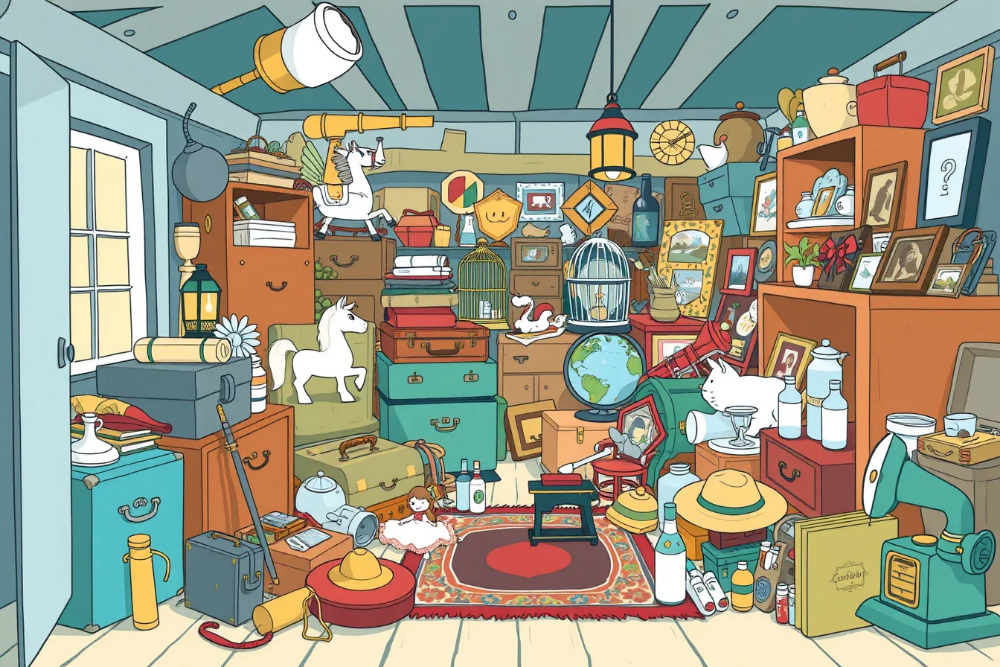
Hidden objects: search within one illustrated scene
In Lookia, you look for objects inside a prepared scene. Start by reading or inspecting the target, then look for its shape and likely visual features. A small object may blend into surrounding colors, so compare outline and context as well as the main color. Knowing what you are looking for matters before searching the whole image.
This mechanic suits a break when you want to examine a detailed illustration. If a busy scene feels tiring, choose an easier scene or a different activity. You do not need to finish the entire list before stopping. Finding one target and inspecting how it was hidden can be a complete small task.
Differences: compare corresponding regions
Differia presents prepared picture pairs. Instead of looking for an object named in a list, compare corresponding areas in the two images. Start with a recognizable landmark and inspect its outline, color and nearby details. Moving between equivalent regions makes the comparison easier to follow than repeatedly jumping across unrelated parts of the scene.
Choose this mechanic when you enjoy close comparison more than a broad visual search. The prepared answers belong to the game; an incidental rendering difference or an image-loading problem should not be assumed to be an intended clue. If the display looks wrong, check the page or report the issue rather than trying to interpret a technical artifact as part of the puzzle.
Jigsaws: connect fragments into a whole
Puzzia asks you to place pieces so that their shapes and picture content fit together. You can start with the edge, a strong color boundary or a distinctive object. A few connected pieces can make a useful stopping point because they establish a recognizable part of the scene without requiring the entire puzzle to be complete.
For a short break, choose the layout and subject together. A lower piece count can still be demanding if the image contains a large repetitive area. A more detailed scene may provide clearer landmarks. The jigsaw strategy guide explains sorting by color, shape and picture features when you want a more deliberate approach.
Nonograms: reason from the clues
Crossia offers nonograms, also called picture logic puzzles. Their numbered row and column clues describe groups of filled cells. The activity is therefore different from recognizing a hidden object: you interpret constraints and compare what the rows and columns allow. Begin with a small grid and the product's own instructions if the notation is new to you.
A useful short task is to identify one group of cells whose state can be justified from the clues. Avoid filling cells merely because the emerging picture suggests a familiar shape. The logic should support the placement. If you prefer an activity with immediate visual recognition and little rule learning, a prepared difference pair may be a more comfortable first choice.
Pixel coloring: follow a prepared correspondence
Pixia uses a numbered pixel picture and a palette. You match the indicated entries and watch groups of cells form the image. This is a more directed activity than drawing freely, and it does not require you to solve the same kind of constraint as a nonogram. The goal is to complete the prepared picture through the app's coloring mechanics.
Choose it when you want a visible sequence of small actions and enjoy observing how colored groups define a subject. For a broader creative exercise, pixel art basics discusses outlines and palettes while explaining why a coloring app is different from a free drawing editor. The distinction helps you choose the tool that matches your intention.
Match the break to one clear goal
If you have only a few minutes, choose an app whose controls you already understand. Find one object, identify one difference or connect one small cluster of pieces. Learning a new rule system is also a valid activity, but it may occupy the whole break before you reach the part of the game you originally imagined.
If you have more time, you can explore a new mechanic or continue a larger project. Decide whether you want a repeated action, close comparison or logical deduction. That question is more useful than searching for a universally best attention game. A favorite activity can also change from one day to another without requiring an explanation about your performance.
Keep scores and social play optional
Records, timers and shared rooms may be enjoyable when you want a challenge. If they create pressure you do not want during this break, choose a solo task and avoid pursuing the competitive goal. Check what the current app allows rather than assuming that every interface element can be hidden. You can decline a challenge even when its score remains visible.
Browse the Lookia gallery for illustrated scenes, or explore the club's quiet creativity collection for a different pace. Before closing a continuing project, check its saved state and account. A good short break ends at a point you choose; it does not need to prove a cognitive benefit, produce a record or turn every spare minute into another obligation.